
To achieve great things, two things are needed; a plan and not quite enough time
— Leonard Bernstein.
21st August 2019:
After a year of fundraising, I have finally made it to Malaysia where I’ll spend a year teaching English as a secondary language. Thank you for all those who have donated and supported me to go on this amazing journey. I will be spending a couple days in the capital, Kuala Lumpur, then heading out to my project on the outskirts of Kuala Lipis with my Project Trust partner Denis.
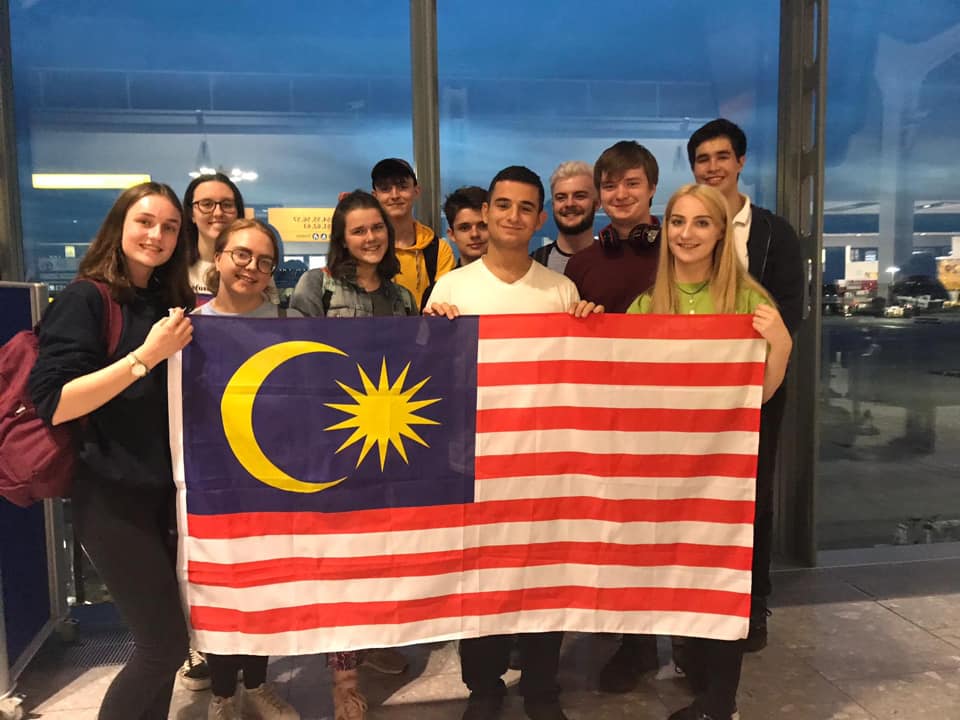
22nd August 2019:
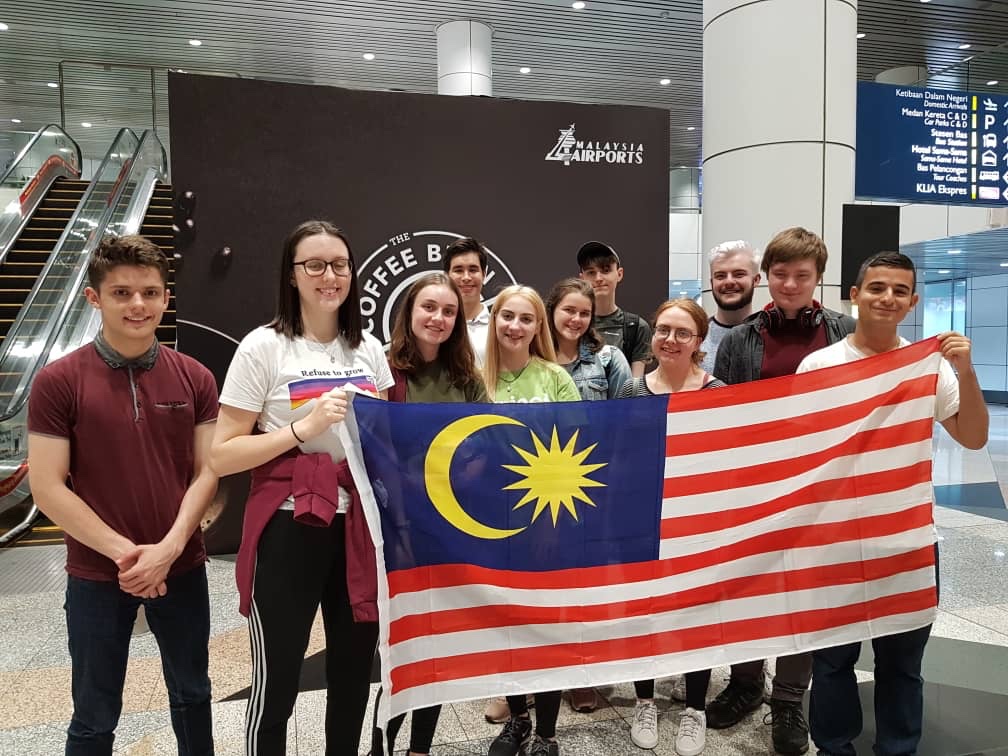
At roughly 5pm in standard Malay time, I had arrived in the capital city on the peninsula island, Kuala Lumpur. The first thing that I had noticed about Malaysia was when the doors of the aeroplane; although I knew Malaysia is very much hotter and humid than in the UK, I was still suprised of the temperature of 35 degrees celsius and the 79% humidity. Funnily enough, this was considered one of the less hot days. At that moment, I realised that becoming acclimatized to this country would be a hard and strenuous journey, one that I may never over-come. After exiting the aircraft, the next step was to head out to the baggage collection, but we were faced with the first hurdle of the day, immigration. For the PTVs, the immigration section was a piece of cake aside for one person, my gap year partner. He just so happened to be taken away to a separate immigration office. As the other volunteers went ahead to meet our country coordinator Jothee and her family, I stayed behind with my luggage and Denis’ waiting for him to be released. After the two hour wait, I met Jothee, her family took all 11 of us out for some Malay-Chinese around a large round table buffet-family style just picking what we want from the plethora of food in front of us.
23rd August 2019:
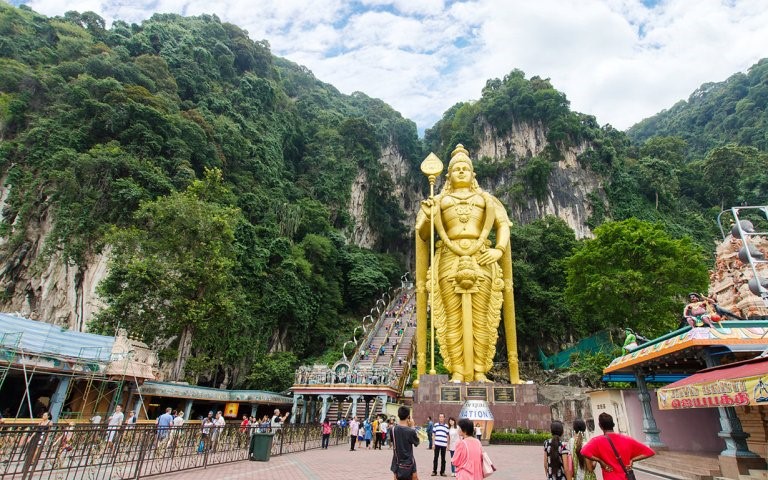
Today, I had some sort of extreme jet lag due to the 7-hour time difference between Malaysia and the UK mixed with 4 hours of sleep and my body clock being completely messed up. Jothee decided to start off our day by taking us to the Batu caves, one of Kuala Lumpur’s most frequented tourist attractions. It is a limestone hill made up of three major caves and a number of smaller ones. The caves are roughly 10-15 kilometres to the north of Kuala Lumpur City Centre (KLCC); this 100-year-old temple contains idols and statues ste up inside the main caves and around the inside. I overheard a tourist group being told in English that the limestone formations are aged at about 400 million years old. The temple is considered an important religious landmark by Hindus with its Cathedral Cave, the largest and most popular cavern in Batu Caves, as well as containing several Hindu shrines beneath its 100-metre-high arched ceiling. When I entered the main area before the steps, we were told that we should not have low bearing plastic bags as monkeys will grab, pull, and steal its contents which you should let them as you may become in a dangerous situation if they are provoked.
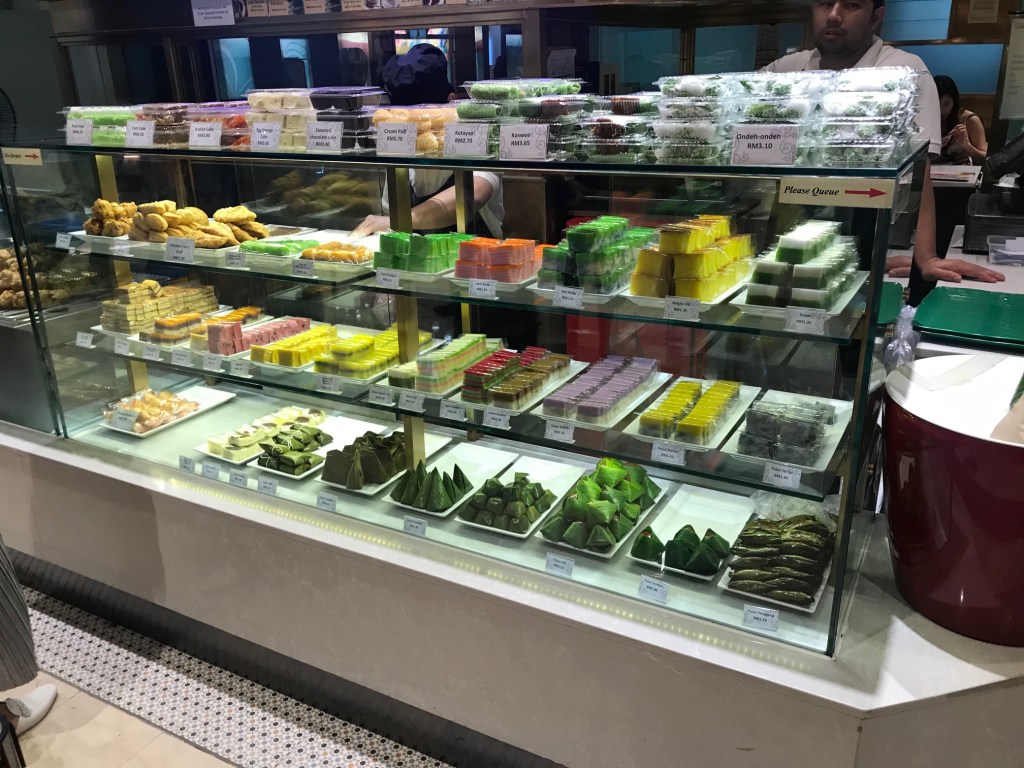
After the caves, were brought to our first mall which turned out to be Malaysia’s largest mall referred to as KLCC. We came to KLCC for a diverse range of reasons, but the first thing we did was get our phone contracts with the service provider CELCOM. After paying for our pre-paid sim cards, Denis and I went to the money exchange office to convert all of my GBP notes into Malay currency; unfortunately, we didn’t realise that no exchange office in Malaysia, aside maybe banks with cashiers, don’t except coins leaving me in a state of having about £8 in 20 pence and 10 pence coins. After dealing with our monetary issues, we were directed to a small café like store where we tried lots of different Malay treats.
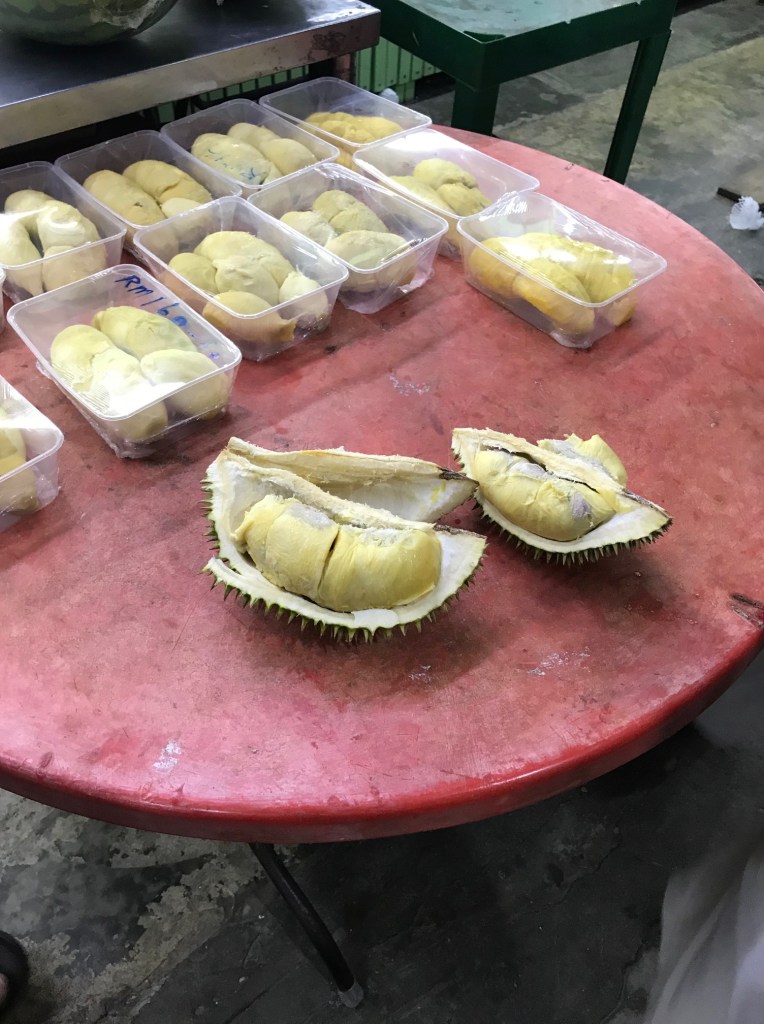
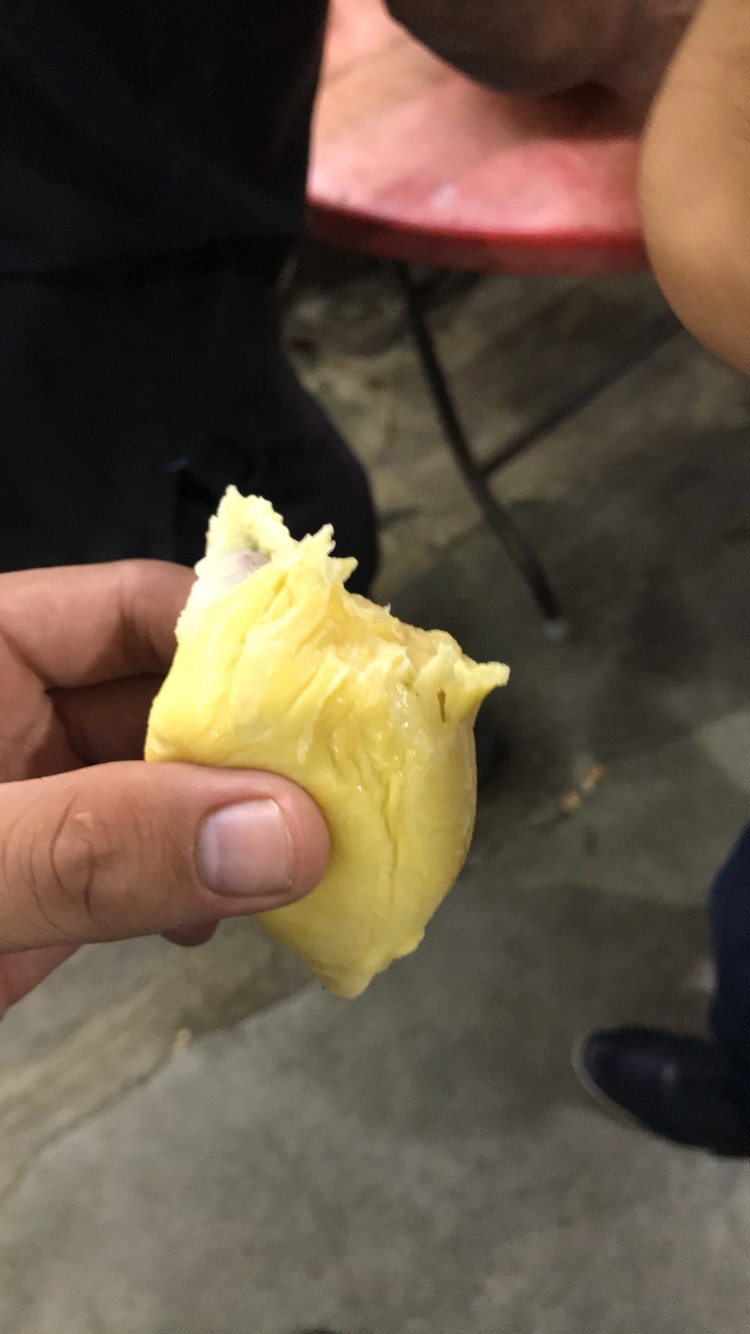
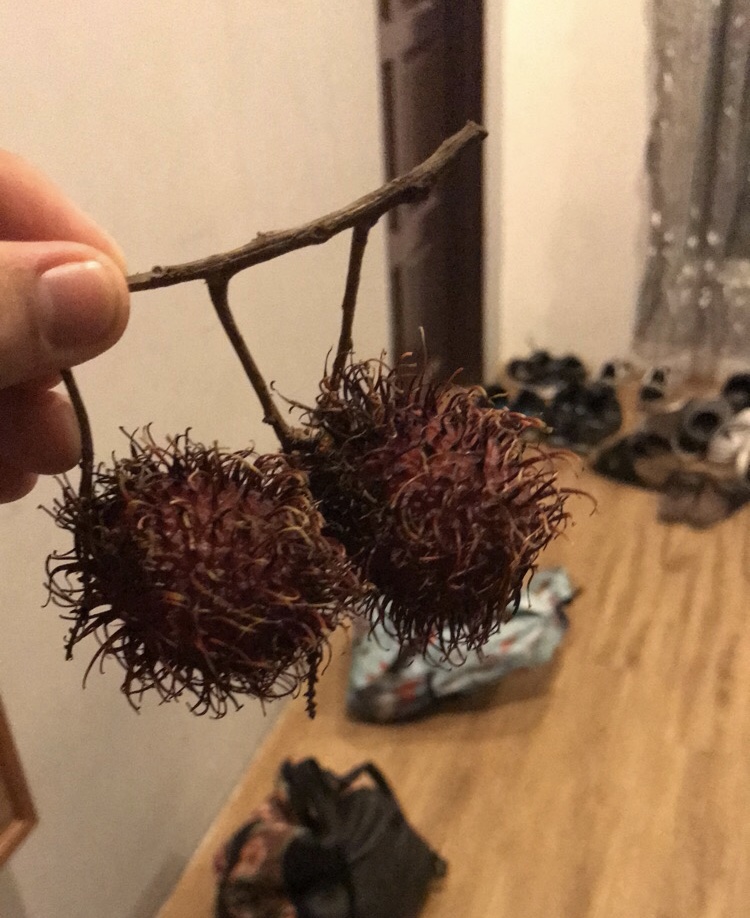
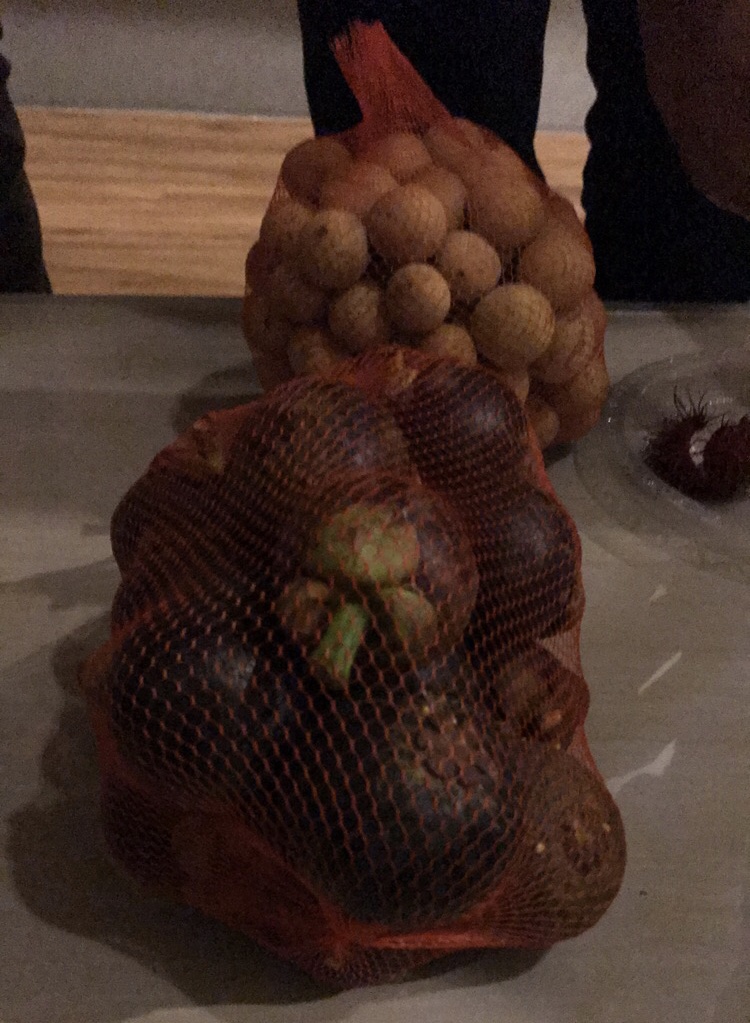
The next highlight of this day was nearer the end after trying a typical Malay dinner when we tried 4 different fruits local to this Malaysian region. Before we arrived at our KL accommodation in Jalan Lemak, we stopped by a small stall where fresh durian was sold. My personal opinion of durian isn’t that bad initially, but the slimy texture mixed with the slight whiff of uncooked garlic and a lingering aftertaste that doesn’t disappear even after brushing my teeth a couple separate times. At the house, there was Rambutan, Langsat, and Mangosteen which funnily enough I have had tasted before in and around London markets.
24th August 2019:
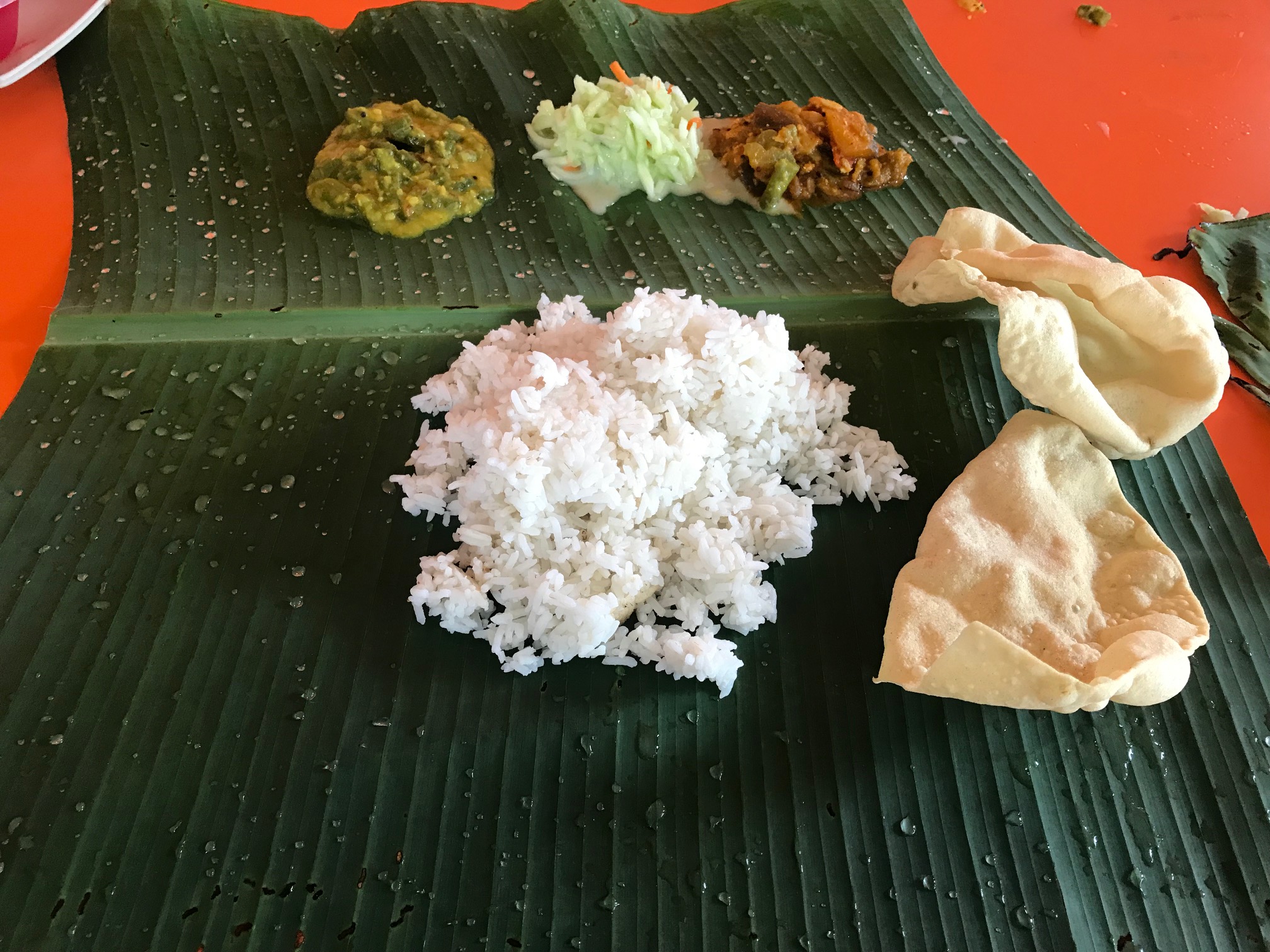
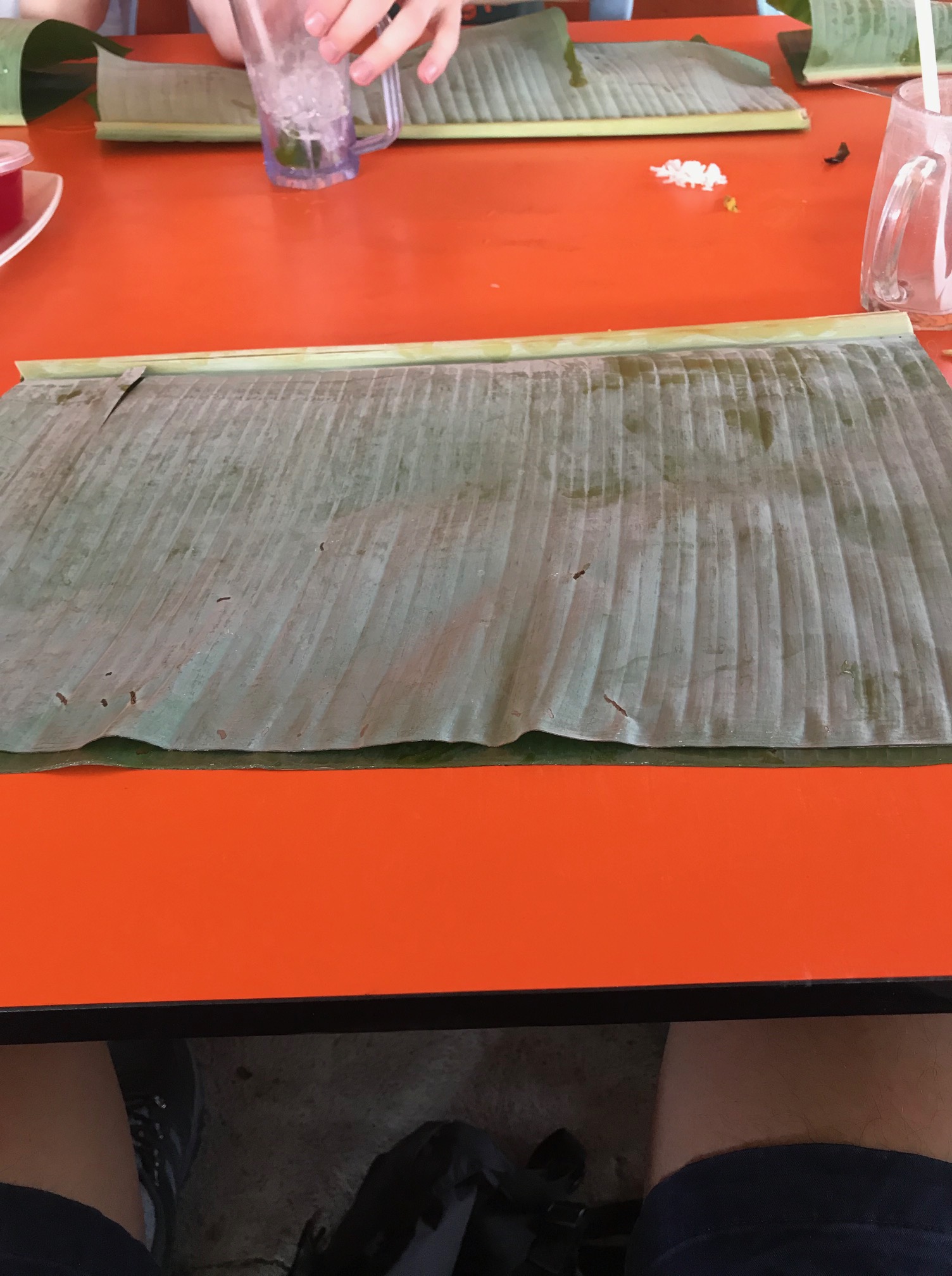
This morning, we started off by going out for breakfast for an Indian dish served on a large banana leaf. We were served white rice, a poppadum, a cucumber sauce and a mild and hot vegetarian sauce on the banana leaf. When I ate this meal, I ate it with meat but you had to get that on a separate dish due to the culture behind this meal where meat isn’t common with the dish, its just an add on. We were taught two more thing about eating in this culture; typically, its more commonly used at local eateries or in dining halls at schools where you would eat with the fingertips not getting the palm dirty resembling cleanliness. Also depending how you feel about the meal depends on which way you fold the banana leaf; if the meal is enjoyed, the leaf is folded towards you but if the meal isn’t enjoyed, the leaf is folded away from you.
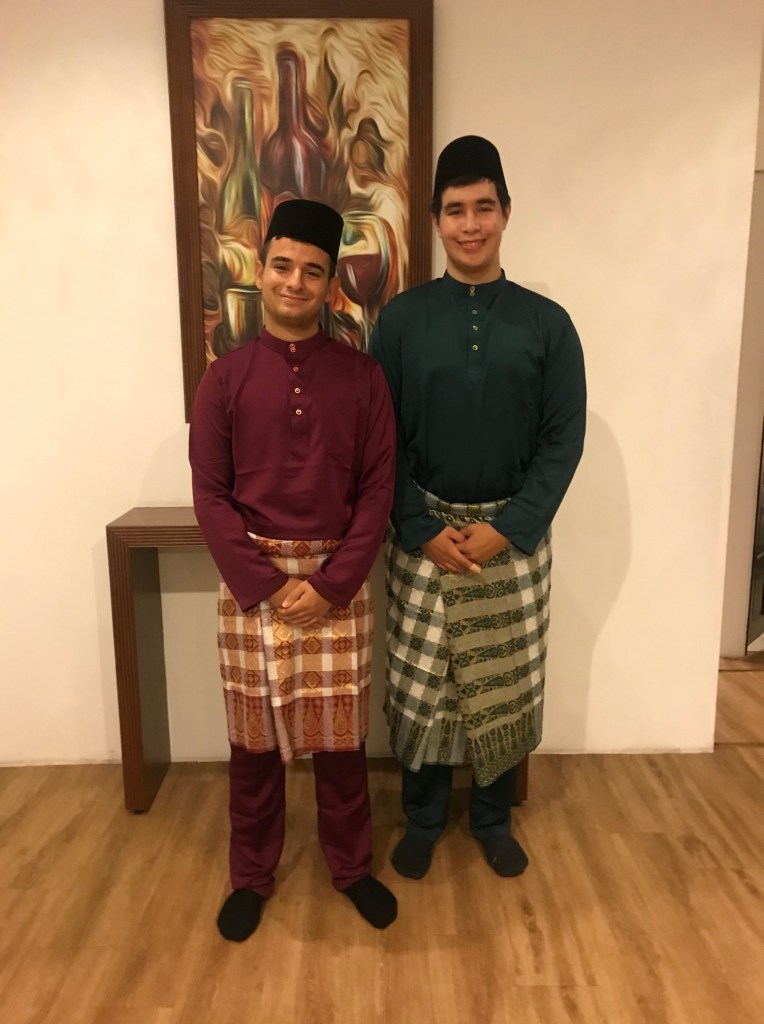
After breakfast we set out for a store called Gedung Aneka Kamdar where we bought traditional clothing which we would where on specific dates to signify different occasions. I bought myself 2 short-sleeved and 1 long-sleeved (Indonesian by accident) batik shirts, which for being made of silk was much cheaper here in comparison to the UK. Batik shirts are worn on Thursdays because The government wanted to revive the industry so from beginning June 2005, all male civil servants are to wear batik to work on Thursdays. I bought myself a Baju Melayu, its buttons with a serong and the Malaysian songkok. Baju Melayu is a traditional Malay outfit for men. It literally translates as ‘Malay shirt’ and consists of two main parts. The first being the baju (long sleeved shirt) itself which has a raised stiff collar known as the cekak musang collar (literally fox’s leash). The second part is the trousers called “seluar”. The two parts are made out of the same type of fabric which is usually cotton, or a mixture of polyester and cotton. A skirt-type adornment is also commonly worn with the Baju Melayu, which is either the “kain samping”, made out of songket cloth or the kain sarung, made out of cotton or a polyester mix. Both are loops of fabric which are folded around the wearer’s waist. A jet-black or dark coloured headgear called the songkok can also worn to complete the attire. The Baju Melayu is commonly worn in Brunei, Malaysia, southern Thailand and Singapore by Malay men, although its use in Singapore & Thailand is usually restricted to Fridays at mosques, and the Eid ul-Fitr (Malay: Hari Raya) holiday. Bruneian and Malaysian men usually wear the shirt for general religious occasions, such as visiting the mosque or for a religious gathering. In Brunei, it is commonly worn at formal events, such as festivals and weddings. Some companies allow their male workers to wear Baju Melayu on Fridays, whereas others have it as a policy. whereas the girls wear there Baji Kerong on a daily basis as they are to cover up to be more culturally appropriate.
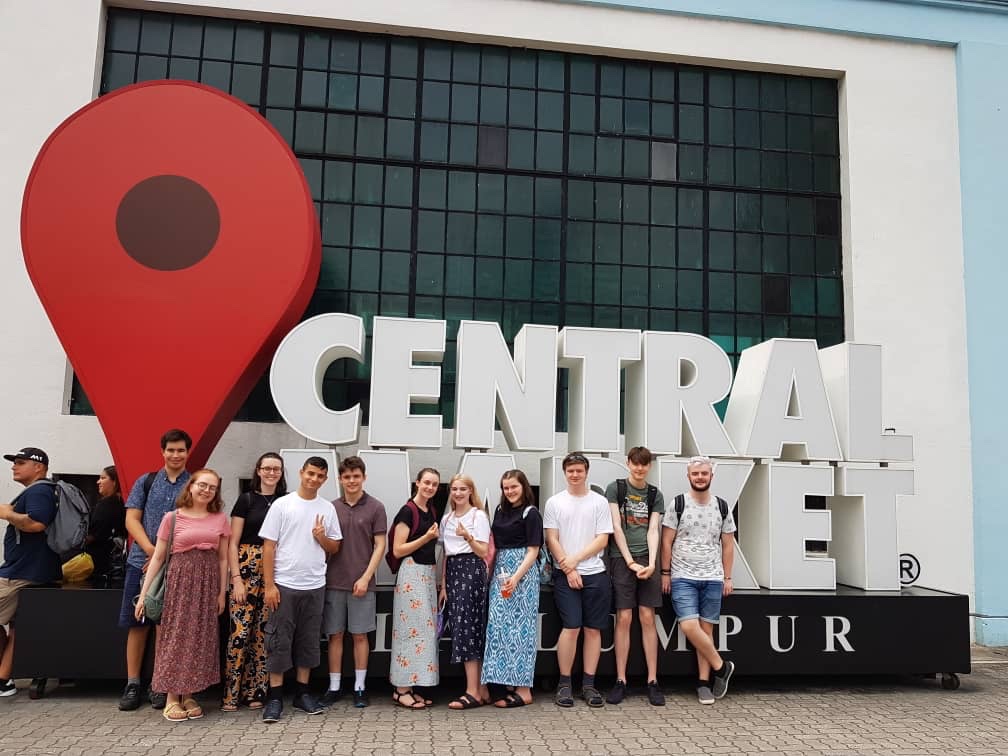
Central market – After I bought my Baju Malayu and we went home to try it on. We all spent about an hour or two at home just resting at home because we were so tired and not used to the heat. After the resting in our air-conditioned accommodation, we set out with Jothee and her family to the Central Market, which was like a mall like place mixed with a market sort of vibe as there were about equal part stalls as there were stores. This seems to be a store you would most likely visit for souvenirs rather than general shopping as it didn’t have any big brands but had some local treats like chili powder mixed with avocado to be used as a face mask.
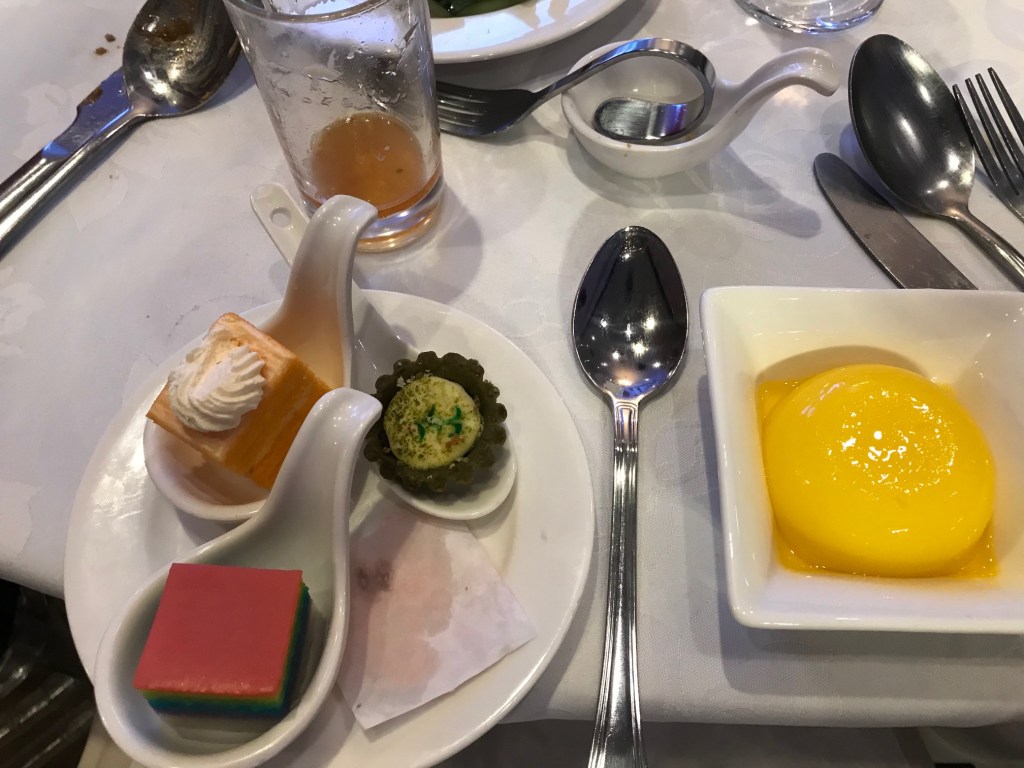
In the evening, we dressed up in smart-ish clothing and went out for supper at @TheLoveMatic for both a buffet of Malaysian and western food with additional spice and a show which was quite fantastic.
27th August 2019:
This day was the first full day at MRSM Tun Ghazali Shafie. I was woken early this morning to the siren call of the first prayer beginning at 5:00. I hadn’t fallen asleep until about 2:20 in the morning as I was still being affected by jet lag of a 7-hour time difference. So, I had survived the first night in my mosquito and bug infested room, had an amazing time trying to figure out the shower system in my household. After getting ready for school, I exited my humble abode at about 7 in the morning.
Once we had down a fairly long hill, I met one of my two mentors called Hamzah, whom is one of the deputy principals of MRSM TGS; Hamzah started our time here by giving us a general tour around the school showing us the places to eat, the library, lecture halls, the office, the staff room and the class rooms. The classrooms are split fairly simply; on the level of the staff room are the Form 3s on the right and the Form 5s because they have major exams in these years, like GCSE and A-Levels, so they can be close to the help they may want. To clarify, in this school, students often go into the staff room to go see teachers unlike in the UK where no students can go in there. By going up one floor, we have the Form 2s from A to D on the left, but Class 2E is on the underground floor. On the right, we have all the Form 4s and at the end of the hall there is Class 1E. By going up to the final floor, we have the rest of the Form 1s. Usually, in each ‘batch’, which is the same as a year group, there are about 150 students split into classes from A to E where the letters A to E are the names of Islamic warriors. A à Al-Ammar, B à Al-Biruni, C à Al-Khawarizmi, D à Al-Dinawari, E à Al-Emran. Over a course of 5 years at this school, there are about 750 students each year. I was told by Hamzah that the school year here goes from January to December which makes PTVs teaching here fairly annoying in the sense that we come in part way through the year right as they are doing end of year exams. I was informed that on most days we work from 7:30-14:30, however on Fridays it is a special religious day where we end up working from about 7:30- 12:30, and that each day we must clock in and clock out on these little punch cards.
Around midday, the first students that I had actually talked to at TGS were three Form 5 girls; Form 5s are aged at 16-17, so approximately the last year of sixth form. After talking to them, I gaged the idea of how good the Form 5s English based off of them which was at least as good as the GCSE level standard for English but with some confidence issues in speaking. Also, just from how everyone acts, including the teachers, they all seem to b very laid back with everything and what we would call urgent is a task they may complete a day or so later.
Later on, my Project Trust partner and I joined one of our mentors, Vernon, in his form 2 class aged at around 13-14. In this class, we did introductions going around the class responding to their questions and asking our own so that we can all learn more about each other. That was the first class that I had ever been the head of even if with a partner, and it started off nerve-wracking but by the end of the lesson, it became a little bit more natural and relaxed.


 Sebastian's travels in Malaysia
Well written and great experience so far Seb! I like that you have put visual images on the stories. Keep it up.
How about the teaching experience! Can’t wait for more!!!
LikeLike
Wow, you have written so much. Will be interesting for you to look back on at the end of your year. Make sure you keep folding your banana leaf the right way! Looking forwards to your future installments
LikeLike